在現代企業的數位轉型中,電子發票系統的自動化是提升營運效率的關鍵一環。本文將基於實戰經驗,深入探討 iDempiere ERP 如何透過技術手段與政府的 Turnkey Server 進行深度整合,建立一套穩定且合規的電子發票架構 。
一、 系統流程總覽:建立數據的橋樑
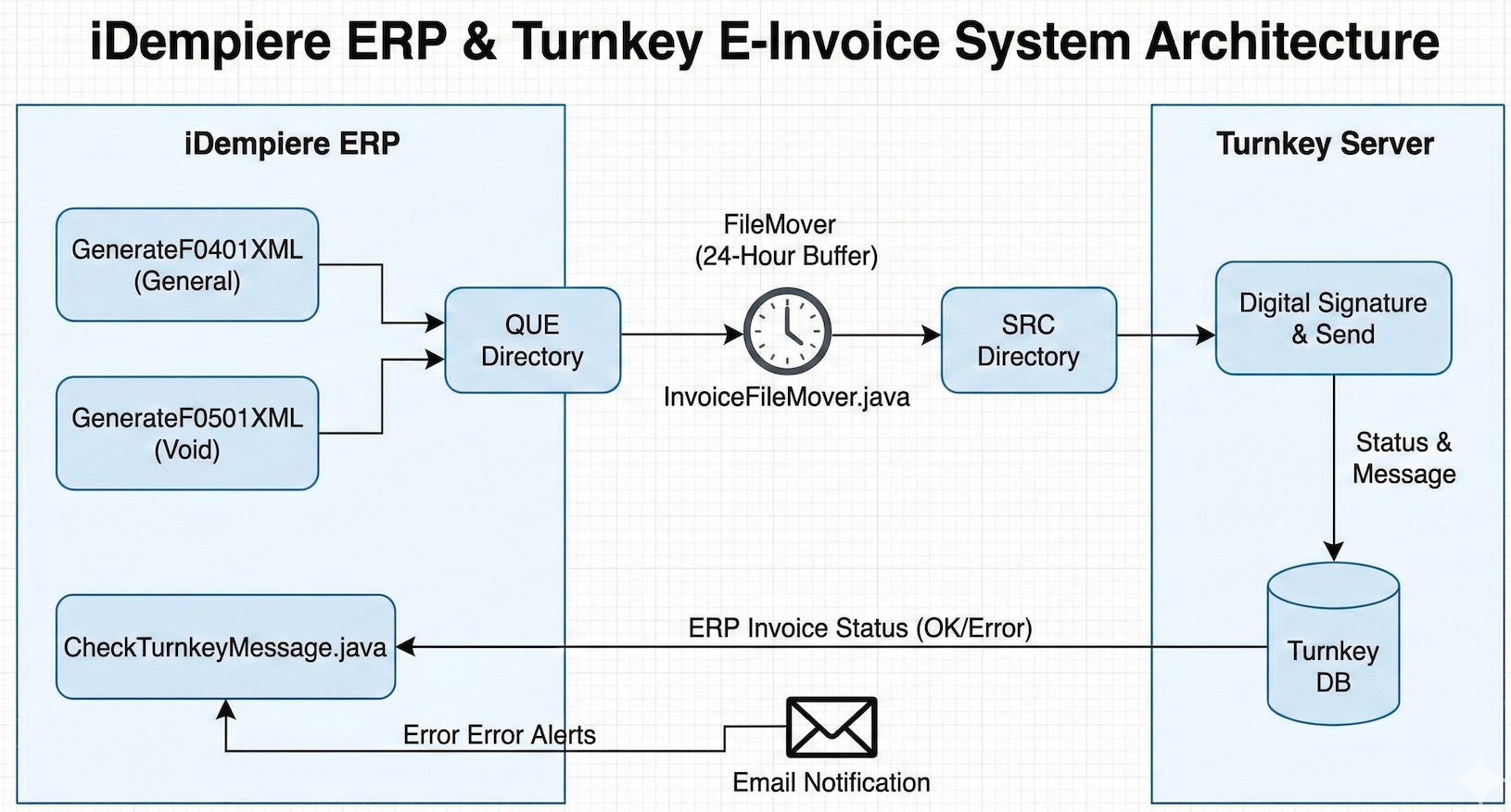
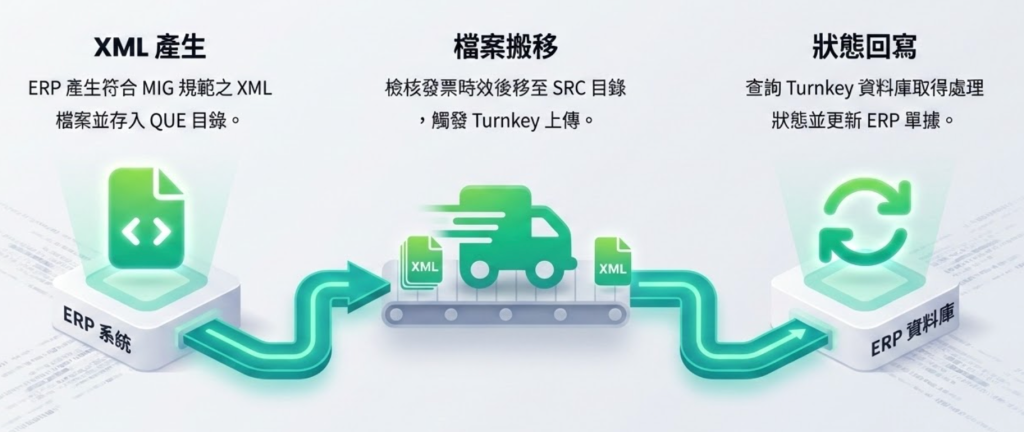
iDempiere 與 Turnkey Server 之間的資料交換,並非單向的檔案傳遞,而是一套嚴密的「產製、檢核、傳送、回寫」循環 。系統的核心目標在於確保 ERP 中的每一筆交易紀錄,都能精準地轉化為符合財政部規範的 XML 格式。
二、 發票處理核心:F0401 與 F0501 流程
在技術層面上,系統針對不同類型的發票作業定義了明確的處理程式:
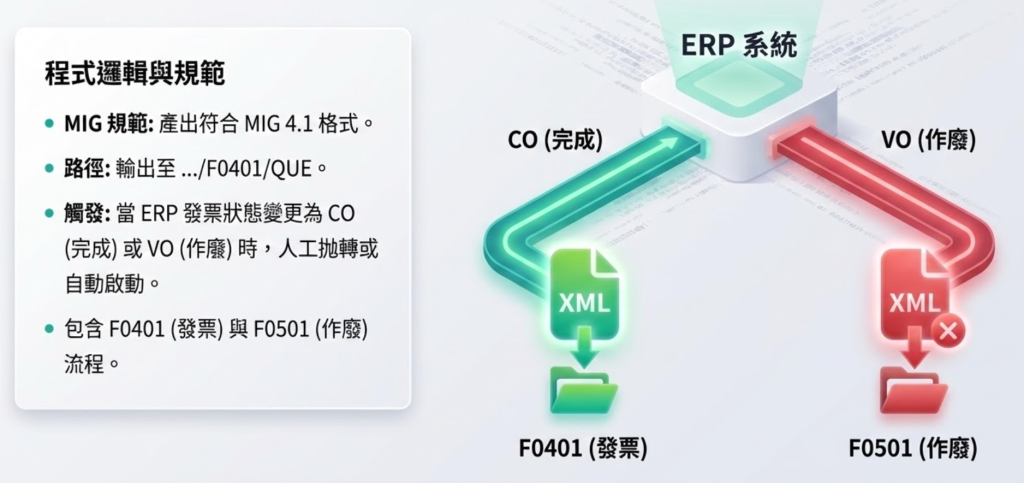
- 一般發票 (F0401): 系統透過
GenerateF0401XML程式,自動讀取 ERP 中的C_Invoice完整交易資料 。產製後的 XML 檔案會先存入QUE目錄等待後續處理 。 - 作廢發票 (F0501): 當單據狀態更新為 VO (Void) 或 RE (Reverse) 時,
GenerateF0501XML程式會啟動,產生作廢通知並存入F0501/SRC目錄中,啟動傳送程序 。
三、 智慧型時效控管:獨特的 24 小時緩衝邏輯
為了提高系統處理的彈性並降低因操作失誤造成的更正成本,這套架構中引入了一個關鍵組件——FileMover 。
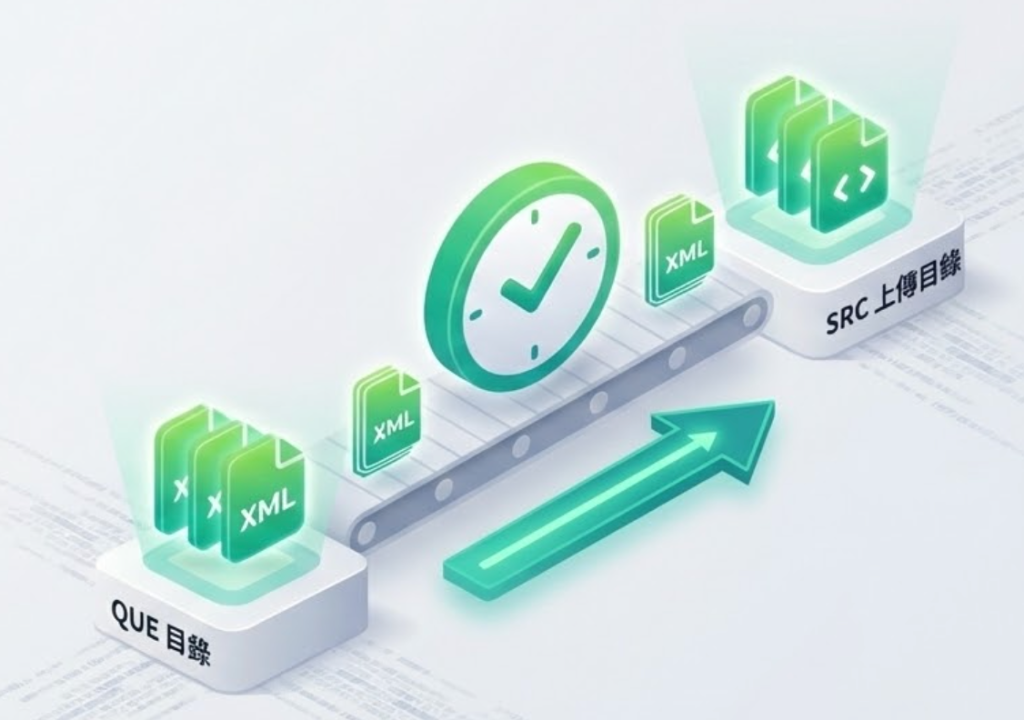
- 自動掃描:系統每天定期掃描
QUE目錄下的 XML 檔案 。 - 24 小時檢核:目前系統設定發票需開立滿 24 小時 後才會進行搬移與上傳 。這項邏輯由
InvoiceFileMover.java進行精準控制 。 - 搬移與加簽:只有符合時間條件的檔案才會被移動至
SRC目錄,進而觸發 Turnkey 的加簽與發送動作 。
四、 狀態回寫與監控機制
系統的最後一步是「閉環管理」。透過 CheckTurnkeyMessage.java 程式,ERP 會定時查詢 Turnkey 資料庫,並根據結果更新 ERP 單據的狀態 :
- 支援類型:包含一般發票 (F0401)、作廢發票 (F0501) 以及折讓相關單據 (G0401/G0501) 。
- 異常通知:系統會自動查詢過去 14 天內的單據,一旦發現狀態為 E (Error),將主動發送 Email 通知維護人員,確保錯誤能被即時修正 。

五、 維護建議與展望
一套穩定的系統需要持續的關注與維護。以下是針對此架構的三個運作建議 :
- 定期日誌檢查:養成檢查
/home/turnkey/mover.log的習慣,確保搬移邏輯運作正常 。 - 連線權限監控:定期確認 ERP 與 Turnkey DB 之間的連線權限,避免因密碼過期或網路調整導致回寫中斷 。
- 規範更新對接:目前系統遵循 MIG 4.1 規範,未來應隨財政部更新進行相應的升級評估 。
這套 iDempiere 與 Turnkey 的整合架構,不僅實現了電子發票的自動化,更透過 24 小時緩衝機制提升了系統的容錯率,是企業建構電子發票系統時非常值得參考的技術實務。
資料來源標註: * 參考自《電子發票系統架構手冊 – iDempiere ERP & Turnkey Server 整合指南》。
English Version
In the digital transformation of modern enterprises, automating the electronic invoice system is a critical component for improving operational efficiency. Based on practical experience, this article provides an in-depth exploration of how iDempiere ERP achieves deep integration with the government’s Turnkey Server through technical means, establishing a stable and compliant electronic invoice architecture .
1. System Process Overview: Building a Data Bridge
The data exchange between iDempiere and Turnkey Server is not a simple one-way file transfer, but rather a rigorous cycle of “generation, verification, transmission, and write-back” . The core objective of the system is to ensure that every transaction record in the ERP can be accurately converted into XML format that complies with the Ministry of Finance’s specifications.
2. Invoice Processing Core: F0401 and F0501 Workflows
At the technical level, the system defines clear processing procedures for different types of invoice operations:
- Standard Invoice (F0401): The system uses the
GenerateF0401XMLprogram to automatically read the complete transaction data fromC_Invoicein the ERP. The generated XML files are first stored in theQUEdirectory awaiting subsequent processing. - Void Invoice (F0501): When the document status is updated to VO (Void) or RE (Reverse), the
GenerateF0501XMLprogram is triggered, generating a void notification and storing it in theF0501/SRCdirectory, initiating the transmission process.
3. Intelligent Time-based Control: The Unique 24-Hour Buffer Logic
To improve system processing flexibility and reduce correction costs caused by operational errors, this architecture introduces a key component — FileMover .
- Automatic Scanning: The system performs daily scheduled scans of XML files in the
QUEdirectory. - 24-Hour Verification: The current system is configured so that invoices must be issued for at least 24 hours before they are moved and uploaded. This logic is precisely controlled by
InvoiceFileMover.java. - Move and Sign: Only files that meet the time condition will be moved to the
SRCdirectory, triggering Turnkey’s signing and sending actions.
4. Status Write-back and Monitoring Mechanism
The final step of the system is “closed-loop management”. Through the CheckTurnkeyMessage.java program, the ERP periodically queries the Turnkey database and updates the ERP document status based on the results :
- Supported Types: Including standard invoices (F0401), void invoices (F0501), and discount-related documents (G0401/G0501).
- Exception Notifications: The system automatically queries documents from the past 14 days. Once a status of E (Error) is detected, it proactively sends an email notification to maintenance personnel, ensuring errors can be corrected promptly.
5. Maintenance Recommendations and Outlook
A stable system requires continuous attention and maintenance. The following are three operational recommendations for this architecture :
- Regular Log Checks: Develop the habit of checking
/home/turnkey/mover.logto ensure the file mover logic is operating correctly. - Connection Permission Monitoring: Regularly confirm the connection permissions between ERP and Turnkey DB to avoid write-back interruptions caused by expired passwords or network adjustments.
- Specification Update Alignment: The current system follows the MIG 4.1 specification. Future updates from the Ministry of Finance should be evaluated for corresponding upgrade assessments.
This iDempiere and Turnkey integration architecture not only achieves electronic invoice automation but also enhances system fault tolerance through the 24-hour buffer mechanism. It is a highly valuable technical reference for enterprises building electronic invoice systems.
Source Citation: * Referenced from “Electronic Invoice System Architecture Manual – iDempiere ERP & Turnkey Server Integration Guide”.
日本語版
現代企業のデジタルトランスフォーメーションにおいて、電子請求書システムの自動化は業務効率向上の重要な要素です。本記事では、実務経験に基づき、iDempiere ERP が技術的手段を通じて政府の Turnkey Server と深く統合し、安定的かつ法令に準拠した電子請求書アーキテクチャを構築する方法について詳しく解説します 。
1. システムプロセス概要:データの橋渡し
iDempiere と Turnkey Server 間のデータ交換は、単純な一方向のファイル転送ではなく、「生成、検証、送信、書き戻し」という厳密なサイクルです 。システムの核心的な目標は、ERP 内のすべての取引記録を財務部の仕様に準拠した XML 形式に正確に変換することです。
2. 請求書処理の中核:F0401 と F0501 ワークフロー
技術レベルでは、システムは異なるタイプの請求書操作に対して明確な処理手順を定義しています:
- 一般請求書(F0401):システムは
GenerateF0401XMLプログラムを通じて、ERP 内のC_Invoiceから完全な取引データを自動的に読み取ります。生成された XML ファイルはまずQUEディレクトリに格納され、後続の処理を待ちます。 - 無効請求書(F0501):伝票ステータスが VO(無効)または RE(取消)に更新されると、
GenerateF0501XMLプログラムが起動し、無効通知を生成してF0501/SRCディレクトリに格納し、送信プロセスを開始します。
3. インテリジェントな時間制御:独自の24時間バッファロジック
システム処理の柔軟性を高め、操作ミスによる修正コストを削減するため、このアーキテクチャには重要なコンポーネント——FileMover が導入されています 。
- 自動スキャン:システムは毎日定期的に
QUEディレクトリ内の XML ファイルをスキャンします。 - 24時間検証:現在のシステム設定では、請求書は発行から 24時間 経過してから移動・アップロードされます。このロジックは
InvoiceFileMover.javaによって精密に制御されています。 - 移動と署名:時間条件を満たしたファイルのみが
SRCディレクトリに移動され、Turnkey の署名と送信アクションがトリガーされます。
4. ステータス書き戻しと監視メカニズム
システムの最終ステップは「クローズドループ管理」です。CheckTurnkeyMessage.java プログラムを通じて、ERP は定期的に Turnkey データベースを照会し、結果に基づいて ERP 伝票のステータスを更新します :
- サポートタイプ:一般請求書(F0401)、無効請求書(F0501)、および割引関連伝票(G0401/G0501)を含みます。
- 異常通知:システムは過去14日間の伝票を自動照会し、ステータスが E(エラー) であることを検知すると、保守担当者にメール通知を主動的に送信し、エラーの迅速な修正を確保します。
5. メンテナンスの推奨事項と展望
安定したシステムには継続的な注意とメンテナンスが必要です。以下はこのアーキテクチャに対する3つの運用上の推奨事項です :
- 定期的なログ確認:
/home/turnkey/mover.logを確認する習慣をつけ、ファイル移動ロジックが正常に動作していることを確認してください。 - 接続権限の監視:ERP と Turnkey DB 間の接続権限を定期的に確認し、パスワードの有効期限切れやネットワーク調整による書き戻しの中断を防いでください。
- 仕様更新への対応:現在のシステムは MIG 4.1 仕様に準拠しています。今後の財務部からの更新に合わせて、対応するアップグレード評価を行う必要があります。
この iDempiere と Turnkey の統合アーキテクチャは、電子請求書の自動化を実現するだけでなく、24時間バッファメカニズムによりシステムの耐障害性を向上させています。企業が電子請求書システムを構築する際に非常に参考になる技術的な実践例です。
出典: * 「電子請求書システムアーキテクチャマニュアル – iDempiere ERP & Turnkey Server 統合ガイド」より参照。